Follow Diloya, take you to appreciate industry trends, real-time information
 Home > News > Company News
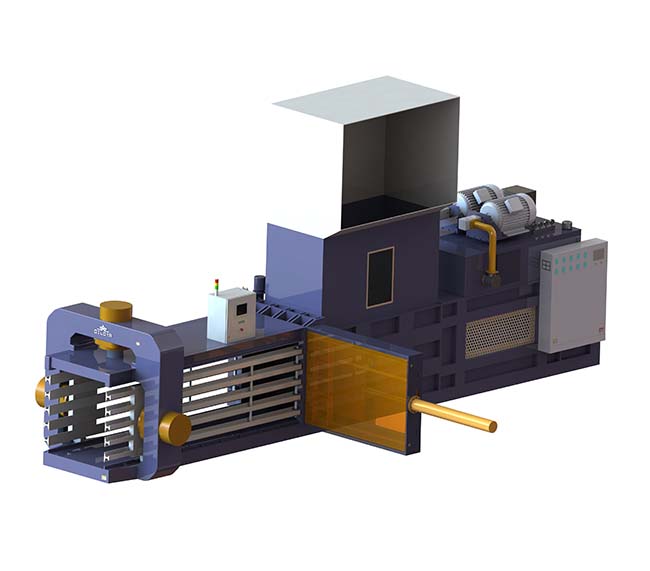
If a metal baling machine is not automatically baling, it can disrupt production and reduce efficiency.
Below are the common causes and their corresponding solutions for this issue:
Common Causes & Solutions
1. Sensor Malfunction or Misalignment
- Cause: The photoelectric sensor, limit switch, or proximity sensor detecting material presence may be dirty, misaligned, or faulty.
- Solution:Clean sensors with a soft cloth (avoid harsh chemicals).Realign sensors to ensure proper detection of incoming scrap.Test sensor response using a manual trigger or diagnostic mode.Replace defective sensors if necessary.
2. Low Material Level / No Material Detected
- Cause: The machine may not detect enough scrap to initiate the baling cycle.
- Solution:Ensure the hopper or feed area is adequately filled.Check that the material level sensor is functioning correctly.Adjust sensitivity settings if applicable.
3. Control System or PLC Fault
- Cause: A fault in the control panel, programmable logic controller (PLC), or wiring can prevent automatic operation.
- Solution:Check error codes on the control display.Inspect wiring connections for loose or damaged wires.Reset the system or restart the PLC.Consult the manufacturer’s manual for troubleshooting steps or contact technical support.
 |
4. Hydraulic System Issues
- Cause: Low hydraulic fluid, air in the system, pump failure, or pressure sensor faults can prevent the baling cycle from starting.
- Solution:Check hydraulic fluid levels and top up if needed.Bleed air from the hydraulic lines.Inspect hoses and fittings for leaks.Verify that the pressure relief valve and pressure switches are working properly.
5. Safety Interlock Switches Triggered
- Cause: Safety doors open, emergency stop button pressed, or guards not secured can disable automatic operation.
- Solution:Ensure all safety doors and guards are fully closed.Press the reset button on the emergency stop (E-stop).Check that interlock switches are functioning correctly.
6. Worn or Jammed Mechanical Components
- Cause: Baler jaws stuck, worn belts, or jammed rollers prevent the bale formation cycle.
- Solution:Inspect and clear any blockages in the baling chamber.Lubricate moving parts (jaws, rollers, chains).Replace worn components like guide rails, springs, or piston seals.
7. Incorrect Settings or Mode Selection
- Cause: Machine may be set to "manual" mode instead of "automatic."
- Solution:Confirm the control panel is set to Automatic Mode.Check for any override settings or programming errors.
8. Motor or Drive Failure
- Cause: Electric motor not powering the baling mechanism due to overload, tripped circuit breaker, or motor burnout.
- Solution:Check circuit breakers and fuses.Listen for unusual noises or vibrations.Test motor continuity with a multimeter.
- Replace motor if faulty.
9. Software/Program Error (for Modern Machines)
- Cause: Firmware glitches or incorrect program parameters.
- Solution:Perform a factory reset (if safe and recommended).Update firmware if available.Reconfigure baling parameters via the HMI interface.
 |
Preventive Maintenance Tips
- Regularly clean sensors and mechanical parts.Lubricate moving components every 500–1000 hours.Inspect hydraulic systems monthly.Conduct weekly checks on safety interlocks and control settings.Keep logs of maintenance and issues.
Summary Checklist Before Troubleshooting:
| Check | Status |
| Is the machine in Auto mode? |
| Are safety doors closed? |
| Is there sufficient material in the hopper? |
| Are sensors clean and aligned? |
| Is hydraulic fluid at correct level? |
| Any error codes displayed? |
| Is the E-stop reset? |
If after checking all these points the machine still won’t auto-bale, contact the manufacturer or a qualified technician for further diagnostics—especially if internal components like the PLC or hydraulic pump are involved.
Let me know your machine model (e.g., Eriez, H&H, Mecanica), and I can provide more specific guidance!
 Product
Solution
Application
Support
News
About us
Contact Us
Product
Solution
Application
Support
News
About us
Contact Us
 Phone: +86 152 2134 7650
 E-mail: info@diloya.com
 Address: No. 888, West Two HuanHu Road, Shanghai Free Trade Zone, China


All rights reserved by DILOYA GROUP
Technical support: E-Power Network