Follow Diloya, take you to appreciate industry trends, real-time information
 Home > News > Recent Report
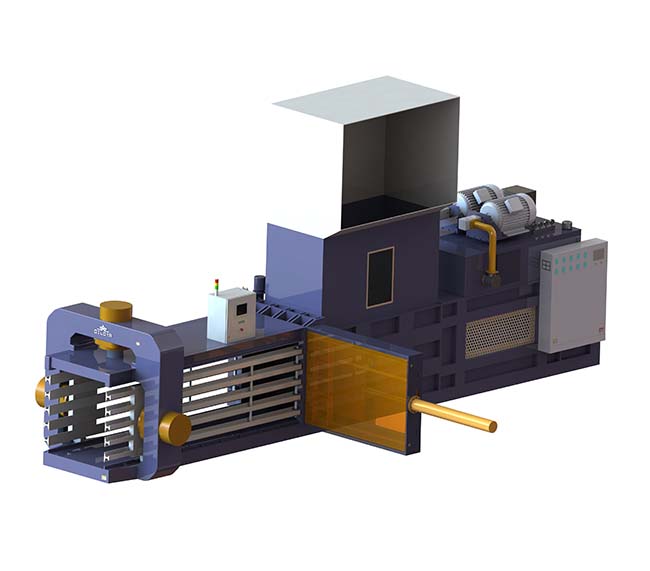
Lubrication and maintenance standards for scrap metal balers are critical to ensuring optimal performance, extending equipment lifespan, reducing downtime, and maintaining operator safety. Scrap metal balers—used in recycling facilities to compress scrap metal into dense bales—are heavy-duty machines subjected to high pressure, repetitive motion, and harsh operating conditions.
Below is a comprehensive guide covering standards, best practices, and practical techniques for lubrication and maintenance.
I. Lubrication Standards
1. Industry & Manufacturer Guidelines
- Always follow the manufacturer’s maintenance manual (e.g., from companies like BHS, TMS, or GMI).Refer to ISO 15242 (Lubrication Management Systems) and ISO 18436 (Condition Monitoring) for general best practices.
- Adhere to OEM (Original Equipment Manufacturer) specifications for:Lubricant type (viscosity, additives, API/ISO classification),Lubrication intervals,Application points (grease fittings, oil reservoirs)
2. Lubricant Selection Criteria
| Factor | Recommendation |
| Type | High-pressure grease (e.g., NLGI #2), synthetic oils (for extreme temps) |
| Viscosity | Based on temperature range (e.g., ISO VG 68 for hydraulic systems) |
| Additives | EP (Extreme Pressure) additives for gears; anti-wear agents for cylinders |
| Compatibility | Ensure compatibility with seals and materials (avoid mixing greases) |
> Use only manufacturer-recommended lubricants to avoid seal damage or premature wear.
 |
II. Key Maintenance Areas & Practical Techniques
1. Hydraulic System
- Lubrication: Hydraulic fluid (not grease).
- Maintenance Tasks:Check fluid level daily; top up with correct grade.Change fluid every 2,000–4,000 hours (per OEM).Replace filters (suction, return, bypass) every 2,000 hours.Inspect hoses and fittings for leaks, cracks, or swelling.Practical Tip: Use a portable fluid tester to check contamination levels (water, particles).
2. Gearboxes & Drives
- Lubrication: Gear oil (e.g., ISO VG 100 or 150 with EP additives).
- Maintenance:Check oil level weekly.Change oil every 2,000–3,000 operating hours.Inspect gear teeth for pitting, scoring, or wear.Practical Technique: Use magnetic drain plugs to catch metal particles—indicates early wear.
3. Pivots, Bearings & Chain Drives
- Lubrication: Lithium-based grease (NLGI #2) with EP additives.
- Maintenance:Grease all fittings (pivots, idler rollers, chain sprockets) every 8–10 hours of operation.Wipe off excess grease to prevent dust attraction.Inspect chains for elongation (>2% stretch = replace).Practical Tip: Use a grease gun with a needle extension for hard-to-reach joints.
4. Bale Chamber & Ram Assembly
- Lubrication: High-temp grease (up to 200°C) at ram seals and cylinder rods.
- Maintenance:Clean debris (metal shavings, dirt) from chamber after each bale cycle.Inspect ram seals for leaks or abrasion.Apply grease to rod surface before each shift.Safety Note: Never lubricate while the ram is under pressure—depressurize first.
5. Shear Blades & Cutting Mechanism
- Lubrication: Light machine oil or dry film lubricant (e.g., molybdenum disulfide).
- Maintenance:Clean blades daily to remove metal buildup.Sharpen or replace blades when dull (reduced cutting efficiency).Check blade alignment and tension regularly.Practical Tip: Use a feeler gauge to verify proper gap between blades.
6. Electrical & Control Systems
- Lubrication: None (no lubrication required).
- Maintenance:Clean dust from control panels monthly.Check wire harnesses for fraying or corrosion.Verify sensor alignment (position, proximity sensors).Preventive Action: Use compressed air to blow out electronics (ensure power is off).
III. Preventive Maintenance Schedule (Example)
| Task | Frequency | Responsible |
| Check hydraulic fluid level | Daily | Operator |
| Grease all pivot points | Every 8–10 hrs | Maintenance Tech |
| Inspect belts and chains | Weekly | Technician |
| Replace hydraulic filters | Every 2,000 hrs | Maintenance Team |
| Full system inspection (including safety interlocks) | Monthly | Supervisor |
| Oil change (gearbox/hydraulic) | 2,000–4,000 hrs | Certified Technician |
| Blade sharpening/replacement | As needed (based on usage) | Maintenance |
 |
IV. Safety & Best Practices
- Lockout/Tagout (LOTO): Always isolate energy sources before maintenance.Personal Protective Equipment (PPE): Gloves, safety glasses, steel-toed boots.Clean Work Area: Remove metal chips and grease spills immediately to prevent slips.Document Everything: Maintain a digital/logbook record of all lubrication and maintenance activities.Training: Ensure all operators and technicians are trained in safe lubrication procedures.
V. Condition Monitoring Tools (Advanced Practice)
- Vibration Analysis: Detect bearing or gear defects early.Thermography: Identify overheating components (e.g., motors, bearings).Oil Analysis: Test for metal particles, water, and oxidation (quarterly).Ultrasonic Testing: Find dry or insufficiently lubricated joints.
> Pro Tip: Implement a CMMS (Computerized Maintenance Management System) to automate schedules and track parts lifecycle.
Summary: Key Takeaways
| Priority | Action |
| 1 | Follow OEM lubrication specs exactly |
| 2 | Grease high-load points frequently (every 8–10 hrs) |
| 3 | Keep the baler clean—debris causes wear |
| 4 | Use proper PPE and LOTO procedures |
| 5 | Train staff on maintenance protocols |
| 6 | Monitor condition via oil analysis/vibration tools |
By adhering to these lubrication and maintenance standards, scrap metal balers can achieve:
- Up to 30–50% longer service life.Reduced unplanned downtime.Lower repair costs.Improved safety and productivity
> Final Note: A well-maintained baler isn’t just efficient—it’s safer, more reliable, and more profitable.
Let me know if you'd like a printable maintenance checklist or a sample CMMS template!
 Product
Solution
Application
Support
News
About us
Contact Us
Product
Solution
Application
Support
News
About us
Contact Us
 Phone: +86 152 2134 7650
 E-mail: info@diloya.com
 Address: No. 888, West Two HuanHu Road, Shanghai Free Trade Zone, China


All rights reserved by DILOYA GROUP
Technical support: E-Power Network