Follow Diloya, take you to appreciate industry trends, real-time information
 Home > News > Industry News
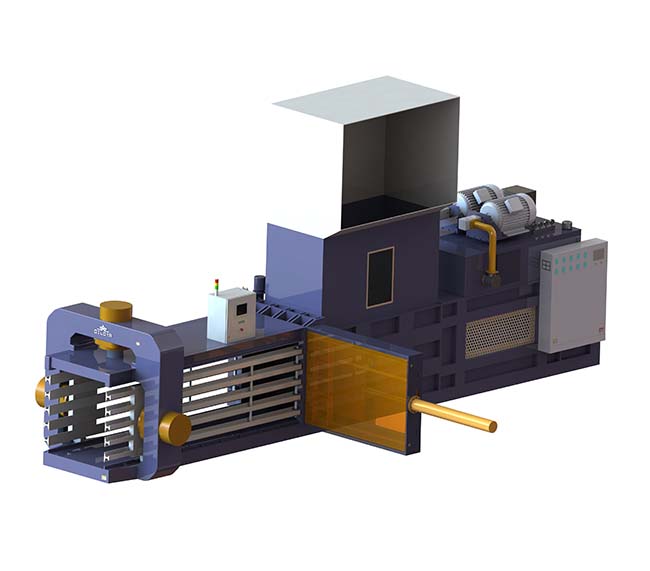
Choosing between a fully automatic and semi-automatic metal scrap briquetting machine depends on your production needs, budget, operational capacity, and long-term goals. Below is a detailed comparison to help you make an informed decision:
1. Automation Level & Operation
| Feature | Semi-Automatic | Fully Automatic |
| Manual Intervention Required | Yes (loading, unloading, monitoring) | Minimal or none |
| Operator Involvement | High (constant supervision) | Low (set-and-forget operation) |
| Cycle Control | Manually triggered | Programmable, automated cycles |
Semi-automatic machines require more hands-on work; fully automatic systems run with minimal human input.
2. Initial Cost
| Feature | Semi-Automatic | Fully Automatic |
| Purchase Price | Lower (typically 30–50% less) | Higher |
| Installation & Setup | Simple, quicker | More complex, may need professional setup |
Semi-automatic is cost-effective for small businesses or startups; fully automatic offers better ROI over time through efficiency.
 |
3. Production Capacity & Efficiency
| Feature | Semi-Automatic | Fully Automatic |
| Output Rate | Lower (manual loading delays) | Higher (continuous operation) |
| Briquetting Speed | Slower due to pauses | Fast, consistent throughput |
| Downtime | Higher (manual handling) | Lower (automated feeding/stacking) |
Fully automatic machines are ideal for high-volume operations where speed and consistency matter.
4. Labor Requirements
| Feature | Semi-Automatic | Fully Automatic |
| Number of Operators Needed | 1–2 per shift | 1 operator can manage multiple units |
| Skill Level Required | Basic training | Slightly higher technical knowledge |
Fully automatic reduces labor dependency—better for facilities with staffing shortages.
5. Maintenance & Reliability
| Feature | Semi-Automatic | Fully Automatic |
| Maintenance Complexity | Simpler components | More complex systems (sensors, PLCs, conveyors) |
| Failure Risk | Lower (fewer moving parts) | Higher (more electronics involved) |
| Downtime Due to Faults | Less frequent but longer repair times | More frequent minor issues possible |
Semi-automatic machines are generally more robust and easier to maintain; fully automatic ones may need skilled technicians.
 |
6. Space & Integration
| Feature | Semi-Automatic | Fully Automatic |
| Footprint | Smaller | Larger (includes conveyors, stackers, controls) |
| Integration with Other Systems | Limited | Can integrate with material handling systems (e.g., robotic loaders) |
Fully automatic setups require more space and planning but offer seamless integration into larger production lines.
7. Best Use Cases
| Machine Type | Ideal For |
| Semi-Automatic | - Small-scale scrap processors
- Startups with limited capital.Shops with low to moderate scrap volume.Operations with available labor |
| Fully Automatic | - High-volume recycling plants
- Industrial facilities with continuous scrap flow.Companies aiming to reduce labor costs and increase output.Facilities investing in automation for future scalability |
Decision Checklist: Which Should You Choose?
Ask yourself:
-How much scrap do you process daily?
→ < 1 ton/day → Semi-automatic may suffice.
→ > 3 tons/day → Fully automatic recommended.
- Do you have skilled operators or sufficient labor?
→ Limited staff? Go fully automatic.
→ Available labor? Semi-automatic is cheaper.
- What’s your long-term growth plan?
→ Planning expansion? Invest in fully automatic now to avoid costly upgrades later.
- Are you prioritizing ROI or upfront savings?
→ Low initial cost? Choose semi-automatic.
→ Long-term efficiency and savings? Choose fully automatic.
Final Recommendation:
- Choose Semi-Automatic if you're starting small, have tight budget constraints, or don’t need high output.Choose Fully Automatic if you’re scaling up, processing large volumes, want to minimize labor, and value consistent, high-efficiency production.
> Pro Tip: Some manufacturers offer hybrid models or upgrade paths—consider future-proofing by choosing a system that allows automation upgrades down the line.
By aligning your choice with your production volume, workforce, budget, and growth strategy, you’ll maximize efficiency and profitability in metal scrap recycling.
 Product
Solution
Application
Support
News
About us
Contact Us
Product
Solution
Application
Support
News
About us
Contact Us
 Phone: +86 152 2134 7650
 E-mail: info@diloya.com
 Address: No. 888, West Two HuanHu Road, Shanghai Free Trade Zone, China


All rights reserved by DILOYA GROUP
Technical support: E-Power Network